Moles
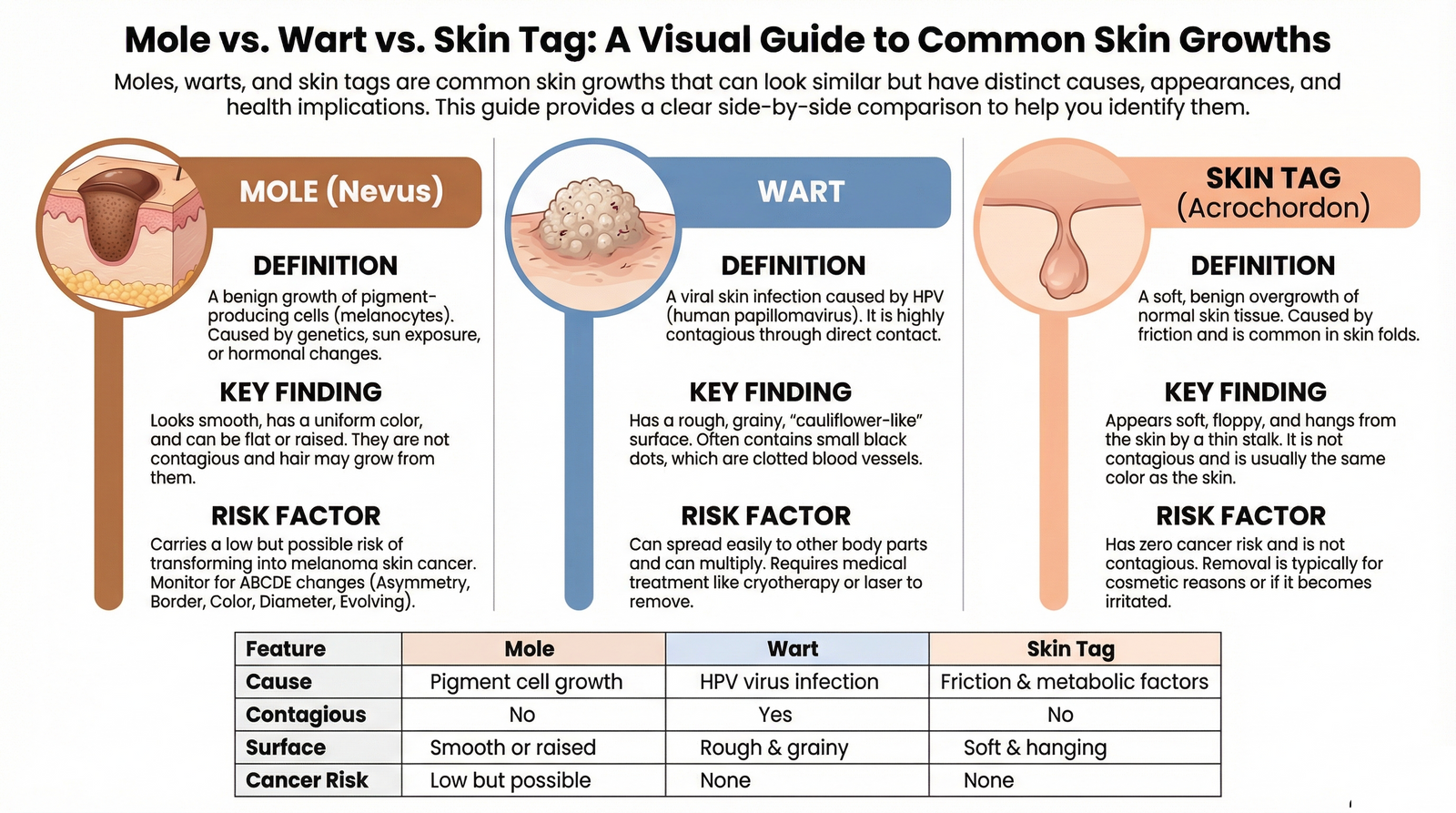
Moles Moles are typically brown, black, or flesh-colored and Blood Spots can differ in shapes and size. A lot of moles are benign, meaning they are not cancerous and present no hazard to your health and wellness. However, some moles can alter with time, and these adjustments may be a sign of melanoma, the most serious kind of skin cancer cells. It frequently happens on the nose, forehead, ears, reduced lip, hands, and other sun-exposed locations of the body. Squamous cell carcinoma is curable if captured and dealt with early. If the skin cancer cells comes to be advanced, therapy will certainly depend on the phase of cancer. They can be found in sun-exposed or sun-protected areas of the body. Irregular moles may be bigger (one-quarter inch across or bigger) and extra uneven in shape, with notched or fading boundaries. Each kind differs in look and behavior, which is why specialist assessment is suggested prior to any lesion elimination. Healthy moles generally have a consistent shade throughout, whether brownish, tan, or another shade. Multiple colors or unequal distribution of color within a solitary mole can be concerning. Learn more about various types of moles and lesions below. It prevails to be troubled by the look of a mole or experience irritability when it scrubs versus your garments or snags on precious jewelry. If you discover any one of the ABCDE indicators, see a doctor. You might need a biopsy to see if the sore is a threat for skin cancer. Skin cancer is the most frequently diagnosed form of cancer, influencing numerous individuals each year. A lot of skin cancers are highly treatable, especially if they are captured early. Many skin cancers cells only influence the top layers of the skin, and unusual cells can be eliminated with an easy treatment. A mole (mole) is a benign growth of melanocytes, cells Raised Skin Lesions that offers skin its color. Although really couple of moles end up being cancer, uncommon or irregular moles can turn into melanoma gradually. "Normal" moles can show up level or elevated or may start level and end up being raised in time. Moles that may have changed into skin cancer are commonly irregularly designed, include many colors, and are bigger than the size of a pencil eraser. A mole, or nevus, is a cluster of pigmented cells that can show up anywhere on the skin. Individuals that have more than 50 usual moles are most likely to develop cancer malignancy, as are people with greater than 5 dysplastic nevi. A household history of skin cancer cells additionally enhances the chance of establishing melanoma. Once more, it is very important to conduct thorough skin exams regularly.
Malignant Skin Lesions: What Are The Indication To Expect?
The borders of benign moles have a tendency to be smooth and also, whereas skin cancer cells sores commonly have uneven, rugged, or blurred edges. Benign moles generally have a consistent shade, such as brown or black, while skin cancer sores may display multiple colors, including shades of brown, black, red, white, or blue. The size of the mole is additionally vital; benign moles are typically smaller than 6mm (about the size of a pencil eraser), while skin cancer sores might be larger and continue to grow gradually. Skin cancer cells is a major problem that happens when skin cells expand frantically.- The progressive buildup of these pigmented locations throughout life can develop significant aesthetic concerns for individuals that prefer even complexion and quality.
- It is a hostile and often fatal cancer cells and may create inner blood loss.
- The size of the mole is additionally essential; benign moles are typically smaller than 6mm (regarding the dimension of a pencil eraser), while skin cancer sores may be larger and remain to expand gradually.
- As opposed to the benign formations previously gone over, actinic keratoses make up precancerous lesions that demand prompt specialist medical focus and therapy intervention.
Possibly Malignant Sores (skin Cancer)
Exactly how to inform if a skin sore is benign?
- Proportion in shape, colour and structure.Stable or gradually evolving.Absence of
- spontaneous bleeding(bleeding or ulceration might be because of current injury).